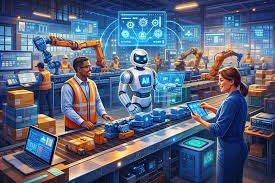
There was a time when running a small business meant doing everything yourself. Late nights replying to emails, juggling spreadsheets, chasing leads, fixing mistakes — and repeating it all the next day.
Somewhere along the way, people started saying “work smarter, not harder.” It sounded nice, but didn’t always feel real.
Now though… things are shifting. Not dramatically, not overnight — but quietly, steadily. AI automation is stepping in, and small businesses are beginning to feel the difference in ways that actually matter.
The Everyday Tasks That Used to Eat Up Hours
Let’s start with the obvious stuff. The repetitive tasks. The ones nobody really enjoys but still need to get done.
Think about customer support emails, appointment scheduling, invoice generation, follow-ups. These aren’t complex tasks, but they drain time. And for a small business owner, time is usually the scarcest resource.
AI tools now handle a big chunk of this workload. Chatbots respond to common queries instantly. Automated systems send reminders without you lifting a finger. Even basic bookkeeping can be managed with minimal manual effort.
It’s not about replacing people. It’s about removing friction.
Marketing Feels Less Overwhelming (Finally)
Marketing used to be… chaotic for small businesses. You either spent money on ads without fully understanding the results, or you tried doing everything manually — posting, writing, designing — and burned out halfway.
AI has started to simplify that.
Content generation tools help with blog ideas, captions, even rough drafts. Analytics platforms now explain what’s working and what’s not, instead of just throwing numbers at you. Email campaigns can be personalized automatically, making them feel less robotic and more relevant.
And the best part? You don’t need a big team to make it happen anymore.
AI automation small businesses ke liye game changer kaise ban raha hai
It sounds like a big claim, but when you look closely, it kind of makes sense.
For small businesses, resources are always limited — fewer people, tighter budgets, less room for error. AI automation levels that playing field a bit. It allows a small team to operate like a larger one, at least in terms of efficiency.
You can respond faster, analyze better, and execute tasks consistently without burning out. That’s not just convenience — it’s a structural advantage.
Of course, it’s not magic. Tools still need direction. They need human judgment. But the heavy lifting? That’s increasingly automated.
Customer Experience Is Becoming Smoother
One of the subtle shifts AI brings is consistency.
Customers don’t like waiting. They don’t like confusion either. When responses are delayed or information is scattered, trust drops quickly.
With automation in place, businesses can offer quicker replies, clearer communication, and a more seamless experience overall. Whether it’s a chatbot answering late-night queries or an automated system updating order status, the interaction feels… smoother.
It’s not about being flashy. It’s about being reliable.
The Learning Curve (And Why It’s Not That Bad)
A lot of small business owners hesitate when it comes to AI. It feels technical, maybe even intimidating.
But the reality is, most modern tools are designed to be simple. Drag-and-drop interfaces, guided setups, templates — they’re built for non-technical users.
Sure, there’s a learning phase. You might try a few tools that don’t quite fit. You might get frustrated at times.
But once you find what works, the payoff is noticeable. Processes become faster. Mistakes reduce. And suddenly, you have a bit more breathing room.
Not Everything Should Be Automated
Here’s where it gets interesting.
While AI can handle a lot, not everything should be automated. Human touch still matters — especially in areas like relationship building, creative decisions, and complex problem-solving.
Customers can tell when something feels too robotic. And that disconnect can hurt more than it helps.
So the real skill isn’t just using AI — it’s knowing where to draw the line.
Automate the repetitive. Personalize the meaningful.
A Subtle but Powerful Shift
What’s happening right now isn’t loud or dramatic. There’s no single moment where everything changes.
Instead, it’s a gradual shift. Small improvements stacking up. A few minutes saved here, a task simplified there. Over time, those small changes add up to something significant.
Small businesses that adapt early don’t just save time — they build systems that support growth without constant stress.
Final Thoughts: Working Differently, Not Just Faster
AI automation isn’t about turning businesses into machines. If anything, it’s doing the opposite.
By handling routine tasks, it gives owners more time to think, create, and connect — the parts of business that actually feel meaningful.
And maybe that’s the real shift. Not just working faster, but working differently.
A little less chaos. A little more clarity. And for once, a sense that the work isn’t running you — you’re running it.