Most people don’t blame their water right away when things around the house start feeling slightly off. If towels come out stiff after laundry, we blame detergent. If the shower leaves skin feeling dry, we buy a different soap. If dishes look cloudy, we assume the dishwasher is getting old.
That’s usually how it goes.
Water itself tends to stay invisible until enough little frustrations pile together that homeowners finally stop and think, “Maybe something else is going on here.”
And honestly, they’re often right.
Water affects far more than people realize. It moves through every corner of daily life — showers, washing machines, dishwashers, coffee makers, kitchen sinks, plumbing systems — quietly influencing comfort without demanding much attention. But when the water quality isn’t balanced properly, those small everyday moments start feeling less enjoyable in ways people can’t always explain immediately.
Hard Water Has a Way of Sneaking Into Daily Life
If you’ve ever noticed chalky buildup around faucets or soap that refuses to lather properly, there’s a good chance hard water is involved.
Minerals like calcium and magnesium naturally occur in many water supplies. In moderate amounts they’re not unusual, but when levels get too high, the effects start spreading throughout the home.
Laundry feels rough. Hair feels dull after showers. Water spots appear constantly on dishes and shower doors. Appliances seem to age faster than they should.
I remember visiting a relative who thought their expensive towels were “poor quality” because they always felt scratchy after washing. Turns out the real issue wasn’t the towels at all — it was the water running through the washing machine every week.
Funny how water problems disguise themselves as unrelated household annoyances.
Softer Water Changes More Than You Expect
One thing homeowners often say after improving their water system is how many tiny routines suddenly become easier.
Soap rinses more naturally. Showers feel smoother on skin and hair. Dishes come out cleaner. Even shaving becomes more comfortable because products lather differently in soft water.
These aren’t dramatic transformations that completely change life overnight. They’re quieter than that.
But honestly, quiet improvements are usually the ones that shape everyday comfort the most because they happen over and over again, every single day.
Laundry Is One of the First Places People Notice the Difference
The laundry room tends to reveal water issues faster than almost anywhere else in the house.
Clothes washed in hard water often feel stiff or faded over time. White fabrics lose brightness more quickly. Towels stop feeling soft even with fabric softener added regularly.
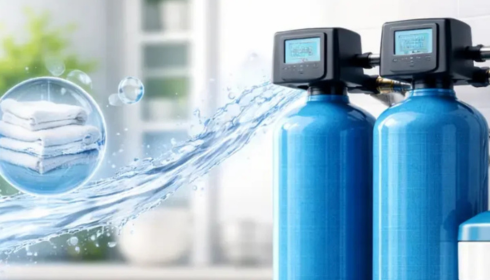
That’s one reason homeowners increasingly invest in better laundry systems designed to work more effectively with treated water. Softer water allows detergents to dissolve and rinse more thoroughly, which helps fabrics stay cleaner and more comfortable over time.
And honestly, there’s something surprisingly satisfying about pulling towels from the dryer that actually feel soft again without dumping extra chemicals into every load.
Water Problems Quietly Affect Appliances Too
A lot of people think water quality only matters for comfort, but hard water can become expensive in subtle ways too.
Mineral buildup gradually collects inside water heaters, dishwashers, washing machines, and plumbing systems. Over time, appliances work harder and efficiency drops little by little.
The frustrating part is that homeowners often blame the appliance itself without realizing the water may be shortening its lifespan behind the scenes.
I once spoke with someone who replaced their coffee machine almost every year because of constant scaling issues. After finally addressing their household water conditions, the problem practically disappeared.
Water really does affect more than most people expect.
Why Water Conditioning Has Become More Common
As homeowners become more aware of how water impacts daily life, modern water conditioning systems have become increasingly popular.
Unlike basic filtration alone, conditioning systems are designed to address mineral content and improve how water behaves throughout the home. The goal isn’t just cleaner water — it’s water that works better with appliances, plumbing, soap, detergent, and everyday routines.
That broader approach matters because water problems rarely stay isolated to one faucet or one room.
Improving water quality often creates ripple effects throughout the entire house.
Better Water Makes Cleaning Easier Too
One underrated benefit people notice after improving their water systems is how much easier routine cleaning becomes.
Shower doors stay clearer longer. Faucets develop less buildup. Soap scum becomes easier to manage. Dishes dry with fewer spots and streaks.
None of this sounds life-changing on paper, admittedly. But repetitive cleaning frustrations have a way of draining energy over time.
When water works with your home instead of constantly creating buildup and residue, the whole space simply feels easier to maintain.
Every Home Experiences Water Differently
Not every household has identical water issues. Some homes mainly struggle with hardness and scaling. Others deal more with chlorine smell, sediment, or staining.
That’s why professional water testing matters before choosing equipment. Understanding exactly what’s in the water helps homeowners avoid wasting money on solutions that don’t truly address the problem.
A small condo with mild mineral levels may need something completely different compared to a rural home relying on well water.
Good water treatment starts with understanding the water itself first.
Comfort Often Comes From Small Improvements
At the end of the day, most homeowners aren’t chasing luxury when they improve their water systems. They’re simply trying to create a home that feels more comfortable and less frustrating to live in.
Softer towels. Cleaner dishes. Better showers. Appliances that last longer. Less scrubbing around sinks and faucets.
These small improvements add up quietly over time.
And honestly, that’s probably why people who upgrade their water systems often say the same thing afterward — they didn’t realize how much their old water had been affecting daily life until the problems finally disappeared.

Admin
A contributor to the Blogistra editorial desk, covering ideas, industries and modern life.
More from this author