A new construction project has a certain energy to it. Fresh plans, marked-out land, trucks coming in and out, people talking measurements, permits, timelines, budgets. It feels like progress before there’s even a wall standing. Most people naturally focus on what they’ll eventually see — the building shape, the driveway, the interior layout, the finished landscaping. That’s the fun part, or at least the part everyone can picture.
But the work that often matters most is the work that disappears. Before a building can feel comfortable, useful, or even fully functional, the underground systems have to be planned and installed properly. Water needs a reliable way in. Wastewater needs a safe way out. Drainage has to make sense. Utility routes need to be placed with care, not guessed at in a hurry.
Why Utility Planning Should Start Early
Every good build starts with a strong foundation, but not just the concrete kind. Utility planning is part of that foundation too. If pipes, trenches, and connection routes are treated like an afterthought, small mistakes can become long-term headaches. A poorly planned line can interfere with landscaping, future repairs, driveway placement, or even the daily use of the property.
That is why new construction utilities deserve attention right from the beginning. They should be discussed during the planning stage, coordinated with site grading, and matched to the needs of the finished structure. A home, shop, or commercial building may all need different water and sewer requirements, and those details matter.
When the utility work is planned early, the project tends to move more smoothly. Crews know where they need to go. Inspectors have clearer information. Property owners avoid last-minute surprises that could slow everything down.
The Ground Tells Its Own Story
No two building sites are exactly the same. Soil conditions, slope, existing lines, trees, drainage patterns, and property layout all influence how utility work should be handled. What looks simple on paper may need a little adjusting once the site is opened up.
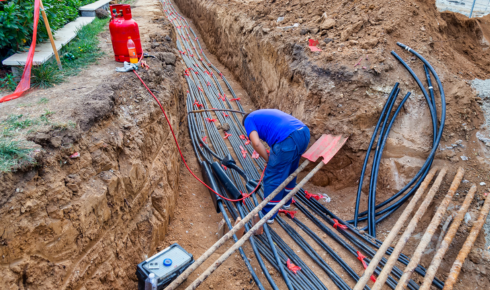
Good underground utility work is not just about digging a trench and placing pipe. It involves depth, slope, bedding material, backfill, safety, and long-term access. If a sewer line does not have the right pitch, drainage problems can follow. If a water line is not properly protected, it may become vulnerable to pressure, movement, or weather conditions.
This is the kind of work where experience shows quietly. You may not notice a properly installed line once the yard is restored, but you’ll definitely notice if it was done wrong.
Water and Sewer Lines Need Careful Routing
Water and sewer systems are basic, but basic does not mean simple. A clean water supply must be dependable, and wastewater must move away safely without repeated clogs or backups. That requires the right pipe materials, proper placement, and a clear understanding of local requirements.
The route matters too. Utility lines should be placed in a way that supports the current build while also keeping future service in mind. Nobody wants to tear through a finished patio or driveway later because access was not considered during installation.
For larger properties, this planning becomes even more important. Longer pipe runs, multiple fixtures, outbuildings, or future additions can all affect how lines should be sized and installed.
Getting the Connections Right
A building may look close to finished, but without working utilities, it is not truly ready. The final hookups are where planning and installation meet real everyday function. Water pressure, drainage flow, inspection approval, and safe operation all depend on this stage being handled correctly.
Professional service connections help make sure the property is properly tied into the required systems. This might include connecting to municipal water and sewer, coordinating with utility providers, checking for leaks, and making sure everything meets code before the job is considered complete.
It’s not the flashiest part of construction. There are no dramatic design choices or pretty finishes here. But a clean, reliable connection is what allows the finished building to actually work.
Avoiding Expensive Fixes Later
One of the biggest reasons to invest in careful utility work is simple: fixing underground mistakes later is rarely cheap. Once concrete is poured, grass is laid, fences are built, and landscaping is finished, every repair becomes more disruptive.
A little extra care early can prevent years of trouble. Proper trenching, cleanouts, shutoff access, accurate line locations, and thoughtful routing can all make future maintenance easier. Even good systems need service eventually, so planning for access is just practical.
Documentation helps as well. Knowing where lines are buried can protect the property during later projects, whether it’s adding a garage, planting trees, or installing outdoor features.
The Right Crew Makes a Difference
New construction involves plenty of moving parts. Builders, plumbers, excavators, inspectors, electricians, and property owners all have schedules to manage. A dependable utility crew understands that their work affects everyone else’s timeline.
Good communication matters. So does showing up prepared, explaining the process clearly, and working safely around the site. When underground work is done with care, the rest of the project has a stronger start.
The Part You Don’t See Still Counts
Once the building is finished, most people will admire the visible details. The siding, floors, fixtures, paint, lighting, and landscaping will get all the attention. That’s fine. Those things make a property feel complete.
Still, the hidden systems below the surface will be working every day. They support comfort, safety, cleanliness, and long-term value. A well-built property is not just what stands above the ground. It is also what was done right beneath it, before anyone thought to notice.